Houston Isn’t Built Like Other Cities — And That’s Exactly the Point
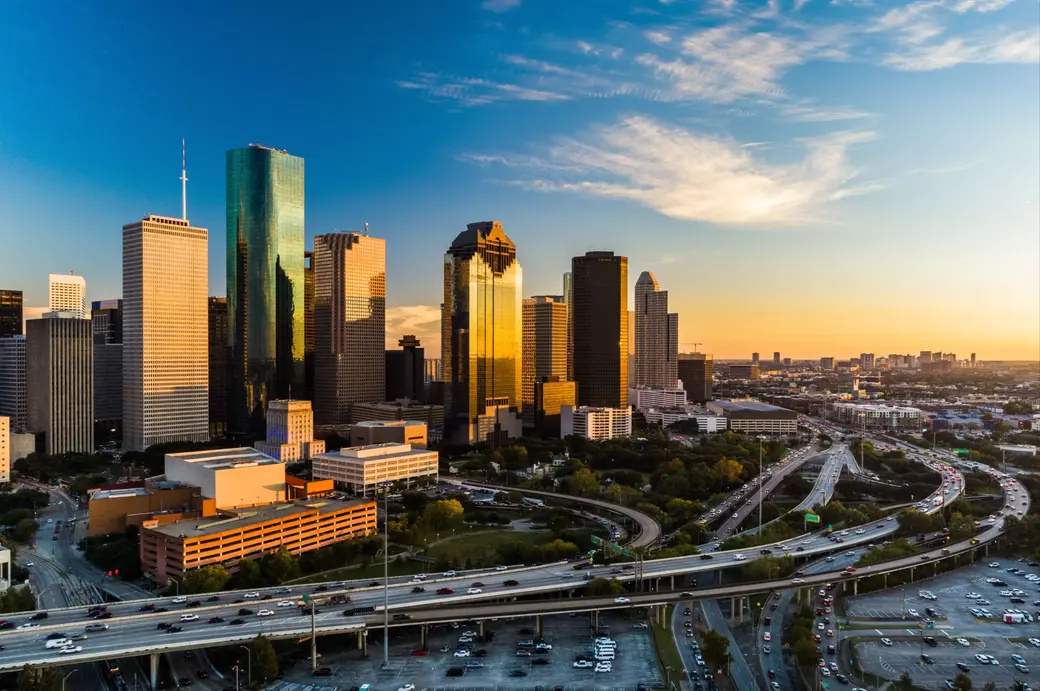
To understand Houston, you have to start with this: it doesn’t follow the rules most cities do.
There’s no traditional zoning code shaping where things go. Instead, development happens through a mix of market forces, deed restrictions, and infrastructure decisions that often play out in real time. The result is a city that feels less planned on paper — but more dynamic on the ground. That difference is what defines Houston. And it’s why so much is happening here at once.
A City Powered by Scale
Houston’s growth isn’t accidental — it’s structural.
The Texas Medical Center, the largest medical complex in the world, anchors a global hub for healthcare, research, and innovation. Nearby, the Port of Houston continues to rank among the most powerful ports in the country, driving trade, logistics, and industrial expansion across the region. These aren’t isolated assets. They shape how Houston grows — influencing where jobs are created, where housing is needed, and where investment flows next.
Infrastructure That Looks Different
In Houston, even infrastructure breaks the mold.
The city’s bayou system — including corridors like Buffalo Bayou — isn’t just scenic green space. It’s a critical part of how Houston manages stormwater and flood control. Over time, these systems have also become anchors for parks, trails, and adjacent development. It’s a reminder that in Houston, functionality and livability often evolve together.
Neighborhoods in Motion
One of the most defining characteristics of Houston is how quickly its neighborhoods can change. Corridors that were once overlooked are now seeing new density, retail, and multifamily development. Areas across the Inner Loop, along major highways, and even in outer-ring suburbs are constantly being reshaped by new projects.
Unlike more static cities, Houston doesn’t wait decades to evolve. It happens block by block, project by project.
Growth Without Pause
Houston’s growth isn’t slowing — it’s compounding.
Population increases, job creation, and ongoing investment continue to push development outward and inward at the same time. New master-planned communities are rising on the edges, while infill projects and mixed-use developments are redefining established areas. For residents, that means the version of Houston you knew five years ago likely isn’t the same city you’re living in today.
The Information Gap
Despite all this activity, most people don’t have a clear picture of what’s actually happening across the city.
Major developments can move forward with little visibility outside of industry circles. Entire corridors can shift before they’re widely noticed. And the implications — for housing, traffic, property values, and lifestyle — often go unexamined.
That gap between what’s happening and what people know is where real understanding gets lost.
Why It Matters
Houston’s growth isn’t just about new buildings. It’s about how those changes affect everyday life — where people live, how they commute, what they pay for housing, and what their neighborhoods look like in the future. Understanding development in Houston means understanding the city itself.
Because here, more than almost anywhere else, change isn’t theoretical. It’s already underway.
For more insight into Houston’s growth, development, and the forces shaping the city in real time, follow @houston.unlocked and stay connected to what’s actually happening on the ground.
Categories
- All Blogs (323)
- 77024 (1)
- 77055 (1)
- Amazon (2)
- Anime (1)
- Barnaby's Cafe (1)
- Barnaby's Garden Oaks (1)
- Bars (3)
- Baseball (1)
- Bay Area (6)
- Baybrook (5)
- Baybrook Gateway (1)
- Beer (1)
- Bellaire (5)
- Brazoria County (1)
- Bridgeland (9)
- Chinatown (2)
- Cinco Ranch (2)
- CityCentre (2)
- Clear Lake (2)
- Columbia Tap Trail (1)
- Common Bond (1)
- Conroe (11)
- Constable (1)
- Costco (1)
- Culver's (2)
- Culver's Cypress (1)
- Cypress (18)
- Development (61)
- Distribution (2)
- Downtown Houston (18)
- Ductwork Houston (1)
- EADO (2)
- East Downtown (2)
- East End (2)
- Eastwood Stattion (1)
- Entertainment (2)
- Event Spaces (2)
- Events (1)
- Everly Hockley (1)
- Farmers Market (1)
- Father's Day (1)
- Fifa World Cup (1)
- Flower Child (1)
- Food and Beverage (24)
- Football (2)
- Fort Bend (14)
- Friendswood (1)
- Fulshear (4)
- Galleria (2)
- Galveston (5)
- Galveston Margaritaville Resort (1)
- Garden Oaks (1)
- Greater Houston (1)
- Grocery Store (3)
- H-E-B (1)
- Half Price Books (1)
- Harris County (8)
- Healthcare (2)
- Healthy Eats (1)
- HEB (2)
- Home Depot (1)
- Homebuilders in Houston (2)
- Homeplace (1)
- Homes for Sale (67)
- Hotel (2)
- Houston (182)
- Houston Destinations (53)
- Houston dining (28)
- Houston FIFA Fan Festival (1)
- Houston Heights (12)
- Houston Housing (12)
- Houston Living (70)
- Houston nightlife (3)
- Houston Real Estate (49)
- Houston restaurant (23)
- Houston Restaurant Weeks (1)
- Houston Restaurant Weeks 2026 (1)
- Houston Summer Guide (1)
- Houston Texas (107)
- HTX Coffee Crawl (1)
- Inner Loop Houston (1)
- Iowa Colony (1)
- Izakaya (1)
- Japanese Izakaya (1)
- Joe & The Juice (1)
- Joe & The Juice Houston (1)
- Joe V's (2)
- Jordan Ranch (1)
- Katy (18)
- Katy Boardwalk (1)
- Kilwins (1)
- Kingwood (2)
- Kinokuniya (1)
- Koyo Hand Roll Bar (1)
- Lago Mar (1)
- Lake Conroe (2)
- League City (2)
- LEEMO Health Bar (1)
- Magnolia (4)
- Manga (1)
- Manvel (5)
- Manvel Crossing (1)
- Marvida (1)
- Master Community (1)
- McKinney (1)
- Medical Center (1)
- Memorial (2)
- Memorial City (1)
- Memorial Park (1)
- Merit Coffee (1)
- Meyerland (1)
- Missouri City (1)
- Montgomery County (6)
- Montrose (1)
- NASA (1)
- New Build Homes (1)
- New Caney (5)
- New Construction (1)
- New Homes in Hockley (1)
- North Houston (4)
- Northeast Houston (2)
- Northwest Houston (5)
- Northwest Houston real estate (1)
- NRG Stadium (1)
- Oak Forest Houston (1)
- Ojo De Agua (1)
- Parks (3)
- Pearland (12)
- Pho Time (1)
- Pickleball (2)
- Pizza (1)
- PJ’s Coffee (1)
- PopUp Bagels (2)
- Pudgy’s Fine Cookies (1)
- Real Estate News (8)
- Recess (1)
- Restaurants (2)
- Rice University (1)
- Rice Village (2)
- Richmond (4)
- Robotaxi (1)
- Rosenberg (2)
- Salads (1)
- Sam's Club (2)
- Sam's Club Richmond (1)
- Shopping (1)
- Skulpt Lagree (1)
- South Houston (1)
- Southeast Houston (3)
- Southern Star Brewing Company (1)
- Sports (1)
- Spring (3)
- Spring Branch (4)
- Spring Valley (1)
- Spring Valley Village real estate (1)
- Sprouts Farmers Market Webster (1)
- Sugar Land (6)
- Sunnyside (2)
- Sunterra (1)
- Texans (51)
- Texas (61)
- Texas City (5)
- Texas Monthly BBQ Fest (1)
- The Commons of Lake Houston (1)
- The Line Drive (1)
- The Woodlands (7)
- TMC (1)
- Tomball (2)
- Tomball Real Estate (1)
- Town Center (1)
- Towne Lake (1)
- Toyota Center (1)
- Trader Joes (1)
- Travel (1)
- True Anomaly Brewing (1)
- Uber (1)
- UFC (2)
- Underground Creamery (1)
- Urban Development (1)
- Valencia (1)
- Valley Ranch Convention Center (1)
- Volunteer (1)
- Walking Trails (1)
- Waller (1)
- Webster (5)
- Wellness (1)
- West Houston (3)
- Whataburger (1)
- Willis (1)
Recent Posts