Zoox Is Bringing Its Robotaxi Technology to Houston
Houston is becoming a major testing ground for the next generation of transportation.
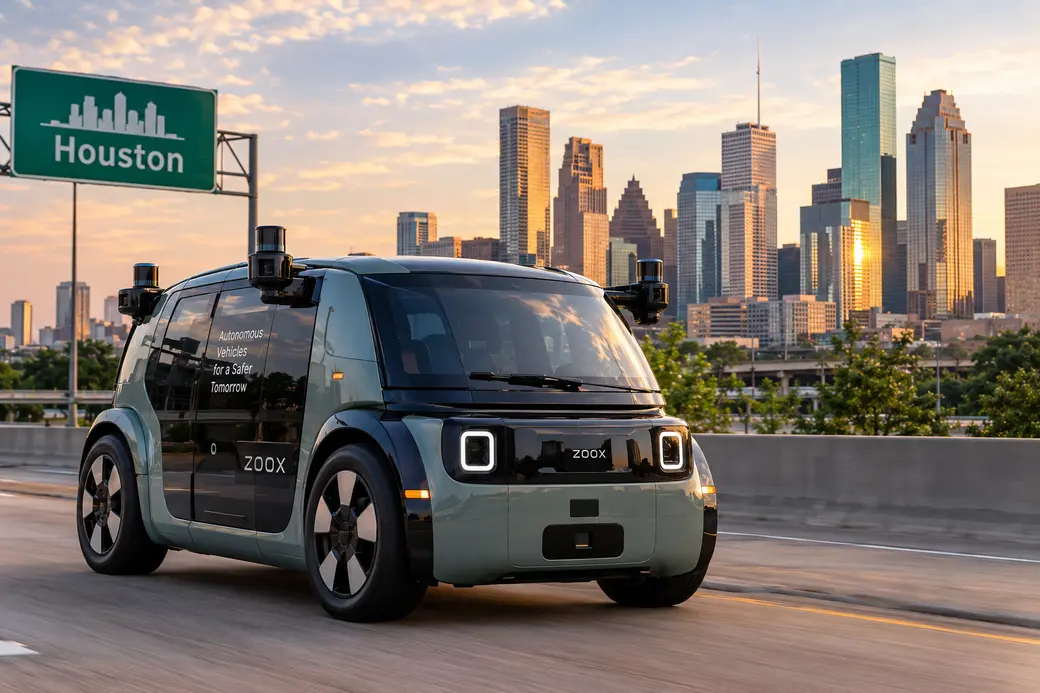
Amazon-owned autonomous vehicle company Zoox is expanding its testing to Houston, adding another major player to the city's growing robotaxi scene. The company describes Houston as its most sprawling market yet, giving its technology a particularly challenging environment to navigate.
But don't expect to see fully driverless Zoox vehicles picking up passengers around Houston just yet.
Zoox is starting with human-driven SUVs equipped with safety drivers, using them to map Houston's roads and gather data before moving toward fully autonomous service.
For Houston residents, the arrival of Zoox adds another major name to an increasingly competitive autonomous-driving market that already includes Waymo and Tesla.
Why Zoox Chose Houston
Houston isn't exactly an easy city for autonomous vehicles.
The region's sprawling road network, frontage roads, complicated freeway interchanges, construction zones and unpredictable traffic patterns create plenty of challenges for self-driving technology.
Then there's the weather.
Houston's intense heat, heavy rain and occasional flooding add another layer of difficulty for autonomous vehicles operating in the real world.
The city's sheer size is another factor. Unlike more compact cities, Houston requires vehicles to navigate a wide variety of road types and neighborhoods across a massive geographic area.
For Zoox, that makes Houston a valuable environment for testing and improving its technology.
In other words, if autonomous vehicles can successfully navigate Houston, they'll have to deal with many of the situations that make driving here uniquely challenging.
The First Zoox Vehicles in Houston Won't Be Fully Autonomous
This is an important distinction for Houston drivers.
The initial Zoox vehicles arriving in the city are retrofitted SUVs with human safety drivers, rather than the company's distinctive purpose-built robotaxis.
These vehicles will be used to map Houston streets and collect information that can help Zoox prepare its autonomous-driving system for the local environment.
The mapping phase is an important step because autonomous vehicles need detailed information about the roads and surroundings in the areas where they operate.
Houston's constantly changing construction patterns make that especially relevant.
A road that looks one way today could have a different lane configuration tomorrow because of construction, closures or shifting traffic patterns.
Where Will Zoox Be Testing?
Zoox's initial Houston testing is expected to cover several major areas of the city.
Those areas include:
- Rice Village
- The Texas Medical Center
- The Galleria
- Memorial Park
- Downtown Houston
- Midtown
- Hyde Park
The testing footprint gives Zoox exposure to a mix of urban streets, major destinations, busy intersections and different road configurations.
For Houston residents, that means you may start noticing Zoox vehicles on local roads even before the company begins offering fully autonomous rides to the public.
Houston's Robotaxi Competition Is Heating Up
Zoox isn't entering an empty market.
Houston has already become a testing and operating ground for other autonomous vehicle companies.
Waymo has expanded its robotaxi operations into Houston, while Tesla has also entered the Houston market with its Robotaxi service.
That puts three major names in the Houston autonomous-vehicle conversation:
- Zoox
- Waymo
- Tesla
And the competition could become even more crowded.
Uber is also pursuing autonomous ride-hailing opportunities, with its robotaxi service expected to expand into Houston in the future.
For Houston residents, increased competition could eventually mean more choices when it comes to getting around the city.
What Makes Zoox Different?
Zoox isn't simply putting autonomous-driving technology into an ordinary car.
The company's eventual robotaxi is a purpose-built vehicle designed specifically for autonomous transportation.
Unlike a conventional vehicle, Zoox's robotaxi has no traditional steering wheel or pedals. Its interior is designed around passengers rather than a human driver, with seating arranged to face one another.
It's a very different concept from the vehicles most Houstonians see on the road today.
However, Houston residents won't immediately be riding in those purpose-built vehicles.
The company is using the supervised mapping phase to prepare for autonomous deployment in the city.
When Can Houston Residents Ride in a Zoox?
That's still the big question.
Zoox has announced its Houston testing plans, but a specific date for public, fully autonomous Zoox rides in Houston has not been established.
The company first needs to map the city, test its technology and prepare its autonomous fleet for Houston's unique driving conditions.
That means the first phase is less about giving Houston residents a new way to get around and more about teaching the technology how to handle Houston.
Eventually, the goal is to transition from supervised testing to autonomous service.
Why This Matters for Houston
The arrival of another autonomous vehicle company could have implications well beyond technology enthusiasts.
If robotaxis become a larger part of Houston's transportation system, they could eventually change how some residents think about getting around the city.
For people who don't drive, can't drive or simply don't want to deal with Houston traffic, autonomous ride-hailing could provide another transportation option.
It could also create competition among different services, potentially giving riders more choices.
But there are still plenty of questions about safety, regulations, pricing, accessibility and how autonomous vehicles will interact with Houston's existing transportation network.
Those questions will become increasingly important as more companies move from testing toward commercial service.
Houston Is Becoming an Autonomous Vehicle Test Case
There's a reason so many companies are paying attention to Houston.
The city is huge, spread out and difficult to navigate. Its roads can change quickly, and drivers regularly encounter everything from complicated freeway interchanges to sudden construction zones and severe weather.
That makes Houston a demanding environment for autonomous technology.
For Zoox, successfully operating here could demonstrate that its system can handle one of the more complicated urban driving environments in the country.
For Houston, meanwhile, it means residents are getting an early look at what transportation could look like in the years ahead.
What Comes Next?
For now, Houston's robotaxi race is still developing.
Zoox is beginning with human-driven mapping vehicles. Waymo and Tesla are already operating autonomous services in parts of the Houston area, while other companies are also looking at the market.
The technology is moving quickly, but so is the conversation around it.
One thing is becoming increasingly clear: Houston is becoming an important city in the race toward autonomous transportation.
Before long, seeing a vehicle without a traditional driver behind the wheel could become a much more common sight on Houston streets.
And when that happens, Houston drivers will have to decide whether they're ready to let technology take the wheel.
Would you trust a robotaxi to get you across Houston?
Follow @houston.unlocked for more Houston transportation news, technology updates, development stories and what's happening across the city.
Categories
- All Blogs (326)
- 77024 (1)
- 77055 (1)
- Amazon (2)
- Anime (1)
- Barnaby's Cafe (1)
- Barnaby's Garden Oaks (1)
- Bars (3)
- Baseball (1)
- Bay Area (6)
- Baybrook (5)
- Baybrook Gateway (1)
- Beer (1)
- Bellaire (5)
- Brazoria County (1)
- Bridgeland (9)
- Chinatown (2)
- Cinco Ranch (2)
- CityCentre (2)
- Clear Lake (2)
- Columbia Tap Trail (1)
- Common Bond (1)
- Conroe (11)
- Constable (1)
- Costco (1)
- Culver's (2)
- Culver's Cypress (1)
- Cypress (19)
- Development (61)
- Distribution (2)
- Downtown Houston (18)
- Ductwork Houston (1)
- EADO (2)
- East Downtown (2)
- East End (2)
- Eastwood Stattion (1)
- Entertainment (2)
- Event Spaces (2)
- Events (1)
- Everly Hockley (1)
- Farmers Market (1)
- Father's Day (1)
- Fifa World Cup (1)
- Flower Child (1)
- Food and Beverage (24)
- Football (2)
- Fort Bend (14)
- Friendswood (1)
- Fulshear (4)
- Galleria (2)
- Galveston (5)
- Galveston Margaritaville Resort (1)
- Garden Oaks (1)
- Greater Houston (1)
- Grocery Store (3)
- H-E-B (1)
- Half Price Books (1)
- Harris County (8)
- Healthcare (2)
- Healthy Eats (1)
- HEB (2)
- Home Depot (1)
- Homebuilders in Houston (2)
- Homeplace (1)
- Homes for Sale (68)
- Hotel (2)
- Houston (184)
- Houston Destinations (55)
- Houston dining (29)
- Houston FIFA Fan Festival (1)
- Houston Heights (12)
- Houston Housing (12)
- Houston Living (72)
- Houston nightlife (3)
- Houston Real Estate (51)
- Houston restaurant (24)
- Houston Restaurant Weeks (1)
- Houston Restaurant Weeks 2026 (1)
- Houston Summer Guide (1)
- Houston Texas (108)
- HTX Coffee Crawl (1)
- Inner Loop Houston (1)
- Iowa Colony (1)
- Izakaya (1)
- Japanese Izakaya (1)
- Joe & The Juice (1)
- Joe & The Juice Houston (1)
- Joe V's (2)
- Jordan Ranch (1)
- Katy (18)
- Katy Boardwalk (1)
- Kilwins (1)
- Kingwood (2)
- Kinokuniya (1)
- Koyo Hand Roll Bar (1)
- Lago Mar (1)
- Lake Conroe (2)
- League City (2)
- LEEMO Health Bar (1)
- Magnolia (4)
- Manga (1)
- Manvel (5)
- Manvel Crossing (1)
- Marvida (1)
- Master Community (1)
- McKinney (1)
- Medical Center (1)
- Memorial (2)
- Memorial City (1)
- Memorial Park (1)
- Merit Coffee (1)
- Meyerland (1)
- Missouri City (1)
- Montgomery County (6)
- Montrose (1)
- NASA (1)
- New Build Homes (1)
- New Caney (5)
- New Construction (1)
- New Homes in Hockley (1)
- North Houston (4)
- Northeast Houston (2)
- Northwest Houston (5)
- Northwest Houston real estate (1)
- NRG Stadium (1)
- Oak Forest Houston (1)
- Ojo De Agua (1)
- Parks (3)
- Pearland (12)
- Pho Time (1)
- Pickleball (2)
- Pizza (1)
- PJ’s Coffee (1)
- PopUp Bagels (2)
- Pudgy’s Fine Cookies (1)
- Real Estate News (8)
- Recess (1)
- Restaurants (2)
- Rice University (1)
- Rice Village (2)
- Richmond (4)
- Robotaxi (1)
- Rosenberg (2)
- Salads (1)
- Sam's Club (2)
- Sam's Club Richmond (1)
- Shopping (1)
- Skulpt Lagree (1)
- South Houston (1)
- Southeast Houston (3)
- Southern Star Brewing Company (1)
- Sports (1)
- Spring (3)
- Spring Branch (4)
- Spring Valley (1)
- Spring Valley Village real estate (1)
- Sprouts Farmers Market Webster (1)
- Sugar Land (6)
- Sunnyside (2)
- Sunterra (1)
- Texans (51)
- Texas (62)
- Texas City (5)
- Texas Monthly BBQ Fest (1)
- The Commons of Lake Houston (1)
- The Line Drive (1)
- The Woodlands (7)
- TMC (1)
- Tomball (2)
- Tomball Real Estate (1)
- Town Center (1)
- Towne Lake (1)
- Toyota Center (1)
- Trader Joes (1)
- Travel (1)
- True Anomaly Brewing (1)
- Uber (1)
- UFC (2)
- Underground Creamery (1)
- Urban Development (1)
- Valencia (1)
- Valley Ranch Convention Center (1)
- Volunteer (1)
- Walking Trails (1)
- Waller (1)
- Webster (5)
- Wellness (1)
- West Houston (3)
- Whataburger (1)
- Willis (1)
Recent Posts