Historic Folgers Coffee Plant in Houston’s Second Ward Approved for Adaptive Reuse
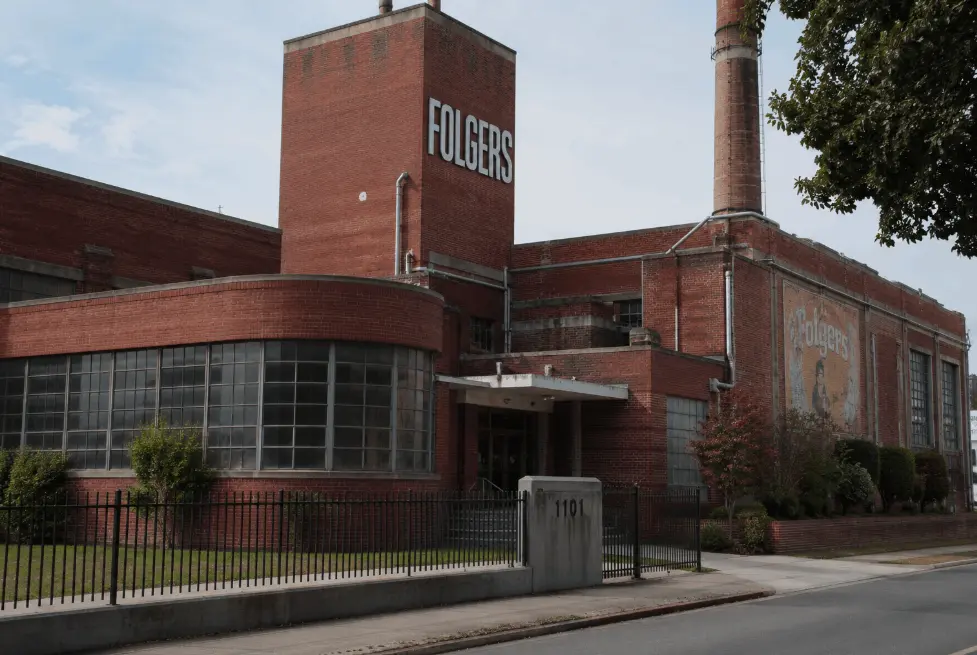
One of Houston’s most recognizable industrial landmarks is set to begin a new chapter.
The former Folgers Coffee Plant in Houston’s Second Ward has cleared a major hurdle on its path toward redevelopment after the Houston Planning Commission unanimously approved a parking variance for the project. The approval helps pave the way for the historic property to be transformed into a mixed-use destination while preserving the structure that has been part of Houston’s landscape for decades.
Rather than facing demolition, the 1930s-era building will undergo adaptive reuse—a development approach that repurposes historic structures for modern needs while maintaining their architectural character. The project is expected to bring new life to the site through retail space and a future home for the Frank Liu Academy for Music and Art.
Preserving a Piece of Houston History
For generations of Houstonians, the former Folgers facility has been a familiar landmark east of downtown. The building stands as a reminder of Houston’s industrial growth during the early 20th century and the role manufacturing played in shaping neighborhoods like the Second Ward.
As Houston continues to grow and redevelop, many historic buildings face uncertainty. Projects like this one offer an alternative to demolition by finding new uses for aging structures while retaining the history and character that make them unique.
Historic preservation advocates often point to adaptive reuse as a way to balance economic development with cultural heritage. Instead of replacing a historic building with new construction, developers can preserve architectural details and community identity while creating spaces that serve current needs.
What’s Planned for the Site?
Current plans call for the former coffee plant to be converted into a combination of retail uses and educational space. A key component of the redevelopment is the planned relocation of the Frank Liu Academy for Music and Art, which would bring arts education and community programming to the historic property.
The project could help create a destination that blends history, culture, and commerce, adding new activity to an area that has seen increasing investment and revitalization in recent years.
Why the Parking Variance Matters
While parking variances may seem like a routine administrative step, they are often critical for adaptive reuse projects involving historic buildings. Older structures were built long before modern parking requirements existed, making it difficult to meet current regulations without significantly altering or compromising the original architecture.
The Planning Commission’s unanimous approval removes a key obstacle and allows the redevelopment plans to move forward while preserving the integrity of the historic building.
A Growing Trend in Houston
The Folgers redevelopment reflects a broader trend across Houston, where developers and community leaders are increasingly looking at ways to preserve historic properties through creative reuse. From former warehouses and industrial facilities to historic commercial buildings, adaptive reuse projects are helping give older structures a second life while contributing to neighborhood revitalization.
For many residents, preserving landmarks like the former Folgers Coffee Plant helps maintain a tangible connection to Houston’s past amid the city’s rapid growth and transformation.
As redevelopment moves forward, the project could become a model for how Houston balances progress with preservation—demonstrating that historic buildings can continue serving the community long after their original purpose has ended.
For more updates on all things around Houston, follow @houston.unlocked and stay ahead of what’s coming next.
Categories
- All Blogs (334)
- 77024 (1)
- 77055 (1)
- Amazon (2)
- Anime (1)
- Barnaby's Cafe (1)
- Barnaby's Garden Oaks (1)
- Bars (3)
- Baseball (1)
- Bay Area (6)
- Baybrook (5)
- Baybrook Gateway (1)
- Beer (1)
- Bellaire (5)
- Brazoria County (1)
- Bridgeland (9)
- Chinatown (2)
- Cinco Ranch (2)
- CityCentre (2)
- Clear Lake (2)
- Columbia Tap Trail (1)
- Common Bond (1)
- Conroe (11)
- Constable (1)
- Costco (1)
- Crosby (1)
- Culver's (2)
- Culver's Cypress (1)
- Cypress (19)
- Development (61)
- Distribution (2)
- Downtown Houston (18)
- Ductwork Houston (1)
- EADO (2)
- East Downtown (2)
- East End (2)
- Eastwood Stattion (1)
- Entertainment (2)
- Event Spaces (2)
- Events (1)
- Everly Hockley (1)
- Farmers Market (1)
- Father's Day (1)
- Fifa World Cup (1)
- Flower Child (1)
- Food and Beverage (24)
- Football (2)
- Fort Bend (14)
- Friendswood (1)
- Fulshear (4)
- Galleria (2)
- Galveston (5)
- Galveston Margaritaville Resort (1)
- Garden Oaks (1)
- Greater Houston (1)
- Grocery Store (3)
- H-E-B (1)
- Half Price Books (1)
- Harris County (8)
- Healthcare (2)
- Healthy Eats (1)
- HEB (2)
- Home Depot (1)
- Homebuilders in Houston (2)
- Homeplace (1)
- Homes for Sale (69)
- Hotel (2)
- Houston (188)
- Houston Destinations (61)
- Houston dining (33)
- Houston FIFA Fan Festival (1)
- Houston Heights (12)
- Houston Housing (12)
- Houston Living (75)
- Houston nightlife (3)
- Houston Real Estate (54)
- Houston restaurant (26)
- Houston Restaurant Weeks (1)
- Houston Restaurant Weeks 2026 (1)
- Houston Summer Guide (1)
- Houston Texas (112)
- HTX Coffee Crawl (1)
- Inner Loop Houston (1)
- Iowa Colony (1)
- Izakaya (1)
- Japanese Izakaya (1)
- Joe & The Juice (1)
- Joe & The Juice Houston (1)
- Joe V's (2)
- Jordan Ranch (1)
- Katy (18)
- Katy Boardwalk (1)
- Kilwins (1)
- Kingwood (2)
- Kinokuniya (1)
- Koyo Hand Roll Bar (1)
- Lago Mar (1)
- Lake Conroe (2)
- League City (2)
- LEEMO Health Bar (1)
- Magnolia (4)
- Manga (1)
- Manvel (6)
- Manvel Crossing (1)
- Marvida (1)
- Master Community (1)
- McKinney (1)
- Medical Center (1)
- Memorial (2)
- Memorial City (1)
- Memorial Park (1)
- Merit Coffee (1)
- Meyerland (1)
- Missouri City (1)
- Montgomery County (6)
- Montrose (1)
- NASA (1)
- New Build Homes (1)
- New Caney (5)
- New Construction (1)
- New Homes in Hockley (1)
- North Houston (4)
- Northeast Houston (2)
- Northwest Houston (5)
- Northwest Houston real estate (1)
- NRG Stadium (1)
- Oak Forest Houston (1)
- Ojo De Agua (1)
- Parks (3)
- Pearland (13)
- Pho Time (1)
- Pickleball (2)
- Pizza (1)
- PJ’s Coffee (1)
- PopUp Bagels (2)
- Pudgy’s Fine Cookies (1)
- Real Estate News (10)
- Recess (1)
- Restaurants (2)
- Rice University (1)
- Rice Village (2)
- Richmond (4)
- Robotaxi (1)
- Rosenberg (2)
- Salads (1)
- Sam's Club (2)
- Sam's Club Richmond (1)
- Shopping (1)
- Skulpt Lagree (1)
- South Houston (1)
- Southeast Houston (3)
- Southern Star Brewing Company (1)
- Sports (1)
- Spring (3)
- Spring Branch (4)
- Spring Valley (1)
- Spring Valley Village real estate (1)
- Sprouts Farmers Market Webster (1)
- Sugar Land (6)
- Sunnyside (2)
- Sunterra (1)
- Texans (52)
- Texas (68)
- Texas City (5)
- Texas Monthly BBQ Fest (1)
- The Commons of Lake Houston (1)
- The Line Drive (1)
- The Woodlands (7)
- TMC (1)
- Tomball (2)
- Tomball Real Estate (1)
- Town Center (1)
- Towne Lake (1)
- Toyota Center (1)
- Trader Joes (1)
- Travel (1)
- True Anomaly Brewing (1)
- Uber (1)
- UFC (2)
- Underground Creamery (1)
- Urban Development (1)
- Valencia (1)
- Valley Ranch Convention Center (1)
- Volunteer (1)
- Walking Trails (1)
- Waller (1)
- Webster (5)
- Wellness (1)
- West Houston (3)
- Whataburger (1)
- Willis (1)
Recent Posts